
In this article
- Key Takeaways
- What a Concrete Driveway Contractor in San Diego Should Evaluate On-Site
- License, Insurance, and Documentation to Verify Before Signing
- How to Compare Estimates: Scope, Materials, and Workmanship Details
- Workmanship Factors That Matter in San Diego’s Climate
- Finish and Design Options: Practical Pros and Cons
- Permits, Inspections, and Right-of-Way Considerations
- Timeline Planning: Demolition, Pour Day, and Cure Time
- Red Flags That Signal a Risky Contractor or Bid
- Questions to Ask Before You Commit (and Why They Matter)
- Final Steps to Choose Confidently
- Frequently Asked Questions
- Get a Driveway Plan You Can Compare With Confidence
Key Takeaways
Choose a Concrete Driveway Contractor San Diego by verifying active California licensing and insurance, then comparing bids line-by-line for base preparation, reinforcement, jointing, drainage, and curing details that match your site conditions. The clearest scope and most site-specific plan—not just the lowest price—helps reduce surprises from demolition through cure.
- On-site evaluation and drainage planning: A reliable contractor should measure, check slope and runoff, review existing slab and soil conditions, and account for access constraints rather than offering a “same approach for every driveway” estimate.
- Documentation you should verify before signing: Request active California contractor license information, proof of liability insurance, and a written proposal that spells out demolition, base prep, placement, reinforcement, joints, finish, curing, haul-off, cleanup, and how change orders will be approved.
- Bid comparison hinges on workmanship details: Compare proposals for compaction method and lift thickness, reinforcement size/spacing and support, control-joint spacing and timing, and curing and protection steps, because San Diego’s sun, wind, coastal moisture, and occasional heavy rain make these execution details critical.
Choosing a Concrete Driveway Contractor San Diego starts with verifying active California licensing, confirming insurance, and reviewing recent local driveway projects similar to your site conditions.
Concrete driveways in San Diego face a mix of coastal moisture, inland heat, and occasional heavy rains, so workmanship details like proper subgrade compaction, reinforcement placement, drainage planning, and control-joint layout matter as much as the mix itself. A qualified contractor should be able to explain finish options (broom, trowel, exposed aggregate), curing practices, and how they will protect adjacent landscaping, sidewalks, and utilities during demolition and pour day.
This guide breaks down what to check in estimates and contracts, how to compare scopes and timelines, which questions to ask about permits and inspections when applicable, and how to spot red flags before you commit.
What a Concrete Driveway Contractor in San Diego Should Evaluate On-Site
A reliable Concrete Driveway Contractor San Diego will start with measurements, grade and drainage checks, and a realistic plan for access, demolition, and placement day logistics.
San Diego properties vary widely—from coastal lots with salt-laden air and higher moisture to inland areas that bake in summer heat—so a quick “same approach for every driveway” estimate can miss important details. The best bids come after the contractor reviews how water moves across your lot, where vehicles actually track and turn, and what’s happening below the surface.
Site and soil conditions that affect performance
Driveway longevity is often determined below the slab, so subgrade condition and base preparation should be discussed early.
- Existing slab condition: cracking patterns, settlement, and spalling can reveal drainage issues or base failure that need correction, not just replacement.
- Soil support: expansive or poorly compacted soils can contribute to movement; the contractor should explain their compaction method and lift thickness.
- Slope and runoff: water should drain away from structures and not pond at the garage or low spots.
- Access constraints: narrow side yards, overhead lines, and limited truck access can influence whether pumping, wheelbarrows, or smaller loads are needed.
If a contractor doesn’t ask about where stormwater goes during a heavy rain, or whether downspouts discharge near the driveway, that’s a sign the scope may be incomplete.
License, Insurance, and Documentation to Verify Before Signing
Before you compare design options or finishes, confirm the contractor is properly licensed, insured, and willing to document the scope in writing.
Concrete work combines heavy equipment, demolition hazards, and property-adjacent work near garages, sidewalks, and utility lines. A professional will be transparent about credentials and won’t pressure you to skip paperwork.
What to request and what it should include
Ask for documentation early so you don’t waste time comparing bids from contractors you can’t confidently hire.
- Active California contractor license information: confirm the license is current and appropriate for concrete work.
- Proof of insurance: request a certificate of liability insurance; if employees are on site, ask how worker coverage is handled.
- Written proposal with a clear scope: demolition, base prep, concrete placement, reinforcement, joints, finish, curing, haul-off, and cleanup should be spelled out.
- Change-order process: how unforeseen issues (soft subgrade, hidden debris, additional grading) will be priced and approved.
It’s reasonable to expect some unknowns until demolition begins, but a strong estimate will describe assumptions and how surprises are handled.
How to Compare Estimates: Scope, Materials, and Workmanship Details
The most useful way to compare bids is line-by-line: what gets removed, what gets rebuilt, and how the slab is reinforced, jointed, and cured.
Two driveway estimates can look similar on price yet differ greatly in preparation and detailing. Since cracking and settlement often trace back to compaction, drainage, and joint layout, prioritize scope clarity over a single bottom-line number.
| Feature / Metric | What to Confirm in the Proposal | San Diego-Specific Considerations |
|---|---|---|
| Demolition and haul-off | Thickness of existing slab to be removed, sawcut limits, disposal included | Tight access and hillside lots may require smaller equipment or staged removal |
| Base preparation | Base material type, lift thickness, compaction method, final grade | Drainage is critical during seasonal downpours; improper slope can cause ponding at garages |
| Reinforcement | Rebar or welded wire mesh size/spacing and how it will be supported during the pour | Vehicle loads (SUVs, trucks, delivery vans) and turning areas can justify upgraded reinforcement |
| Jointing plan | Control-joint spacing, depth method (tooling vs sawcut), layout sketch if possible | Hot inland days can speed drying; timely jointing helps reduce random cracking |
| Curing and protection | Curing method (compound, wet cure, coverings), traffic restrictions, crack prevention steps | Coastal wind and sun can dry surfaces quickly; curing needs to match conditions on pour day |
Details in the scope that should never be “assumed”
These items commonly cause disputes when they’re not clearly included in writing.
- Forming and edge details (thickened edges, steps, or transitions at sidewalks and garage slabs)
- Drainage features (channel drains, swales, tie-ins to existing drains where appropriate)
- Protection of nearby improvements (stucco, garage door trim, landscaping, irrigation lines)
- Restoration work (replacing sprinkler heads, resetting pavers, patching adjacent asphalt)
- Cleanup standards (pressure washing, haul-off of slurry, final brooming of debris)
Workmanship Factors That Matter in San Diego’s Climate
San Diego weather is generally favorable for concrete, but sun, wind, coastal moisture, and occasional heavy rain make curing, finishing timing, and drainage planning essential.
Concrete is a composite material whose performance depends on mixture, placement, and hydration during curing. If you want a deeper primer on what concrete is and how it differs from cement, see concrete.
Subgrade compaction and base build
Even a high-quality slab can crack and settle if the base isn’t uniform and properly compacted.
- Excavate to suitable depth: enough to remove unsuitable material and accommodate base plus slab thickness.
- Place base in lifts: compacted in layers rather than dumping all at once.
- Proof and fine-grade: correct soft spots and shape slope before forms go in.
If your driveway has a history of sinking near the apron or along one edge, ask how the contractor will identify and correct weak zones before pouring.
Reinforcement placement (and keeping it where it belongs)
Reinforcement helps manage cracking and load distribution, but only if it’s positioned correctly within the slab.
- Supported steel: rebar or mesh should be placed on chairs or supports so it doesn’t end up at the bottom.
- Overlap and tying: intersections should be tied and laps should be consistent with the plan.
- Extra attention at stress areas: driveway entries, turning radii, and transitions can benefit from added reinforcement and thoughtful jointing.
Joint layout, edges, and transitions
Control joints are intentional “weak planes” that encourage cracking to occur in straight, planned lines instead of randomly.
A contractor should be able to explain how they decide joint spacing and where joints land relative to the garage, sidewalk, and any decorative pattern. If you’re considering decorative scoring, borders, or stamping, joint placement becomes even more important to avoid awkward interruptions in the pattern.
Finish and Design Options: Practical Pros and Cons
Finish choice affects traction, glare, maintenance, and how well the driveway hides tire marks and everyday staining.
San Diego homeowners often prioritize curb appeal, but the “best” finish also depends on slope, sun exposure, and how the driveway is used (daily parking vs occasional RV or trailer loads).
Common finishes for residential driveways
Most driveway finishes fall into a few families; the right selection balances safety, style, and upkeep.
- Broom finish: good traction and a classic look; commonly used on sloped driveways where slip resistance matters.
- Trowel finish: smoother appearance; can be slippery when wet if overworked or if slope is steep.
- Exposed aggregate: decorative texture with strong traction; appearance depends on aggregate selection and consistent exposure timing.
Decorative upgrades (color, stamping, and patterns)
Decorative options can elevate curb appeal, but they add steps that must be executed correctly to avoid uneven color, pattern distortion, or early wear.
- Colored concrete can be integrated into the mix or applied as a surface treatment depending on the chosen system and design goal.
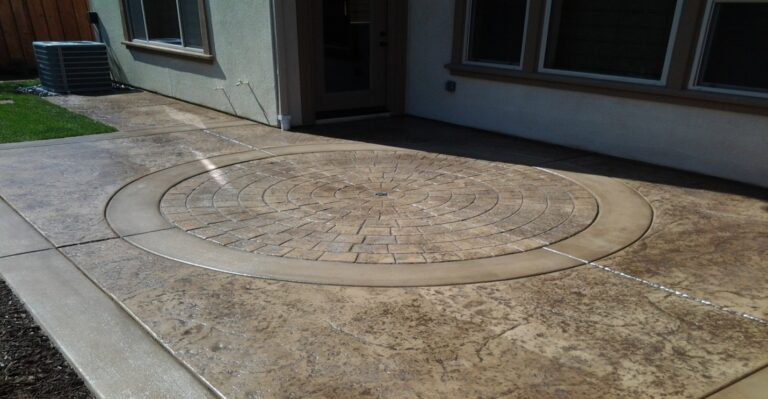
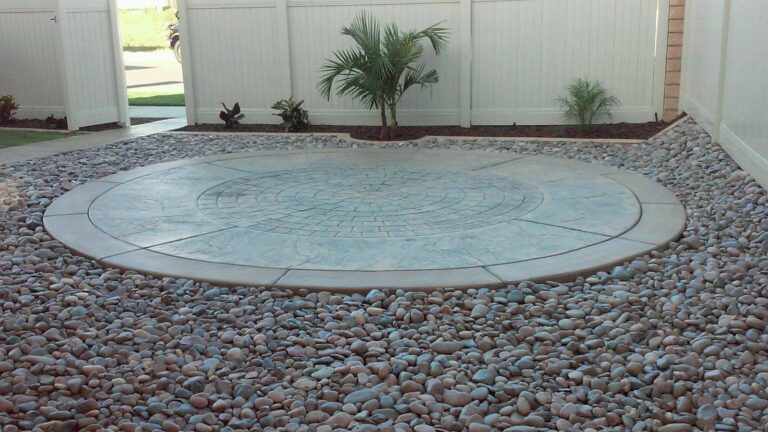
- Stamped patterns can mimic stone or pavers; they require consistent release, timing, and curing to keep patterns crisp.
- Decorative borders and sawcut patterns can help visually break up large slabs and guide joint layout.
If you’re gathering ideas before requesting bids, review concrete driveway design ideas that can enhance your home’s curb appeal to compare looks and think through maintenance expectations.
Permits, Inspections, and Right-of-Way Considerations
Permitting needs vary depending on scope, location, and whether work touches public sidewalks, curbs, or drainage features.
Many driveway replacements are straightforward, but changes to approach grades, drainage, or work near the public right-of-way may involve additional requirements. Because rules can differ by jurisdiction and project details, the contractor should explain what they will verify and who is responsible for pulling permits if needed.
- Sidewalk and apron interfaces: if the project affects the sidewalk or curb, confirm responsibility for compliance and restoration.
- Drainage tie-ins: altering runoff patterns can create downstream issues; the plan should be deliberate and code-conscious.
- Utility conflicts: irrigation, gas, water, and conduit lines should be identified before demolition and excavation.
If a contractor tells you permits are “never required” without asking whether the work crosses into the right-of-way, treat that as a prompt to investigate further.
Timeline Planning: Demolition, Pour Day, and Cure Time
A realistic schedule accounts for demolition, base work, forming, the pour, finishing, and adequate curing time before vehicle traffic returns.
Driveway projects can move quickly once work begins, but weather shifts, access limitations, and inspection needs can change sequencing. Your contract should state an estimated start window, working days (not just calendar days), and how delays are communicated.
What “a normal driveway schedule” often includes
Exact durations vary by size and complexity, but the sequence should be consistent and clearly described.
- Pre-job planning: utility locating, confirming elevations, material ordering, and access protection.
- Demolition and excavation: remove old concrete and unsuitable base; haul off debris.
- Base installation and compaction: grade for drainage; compact in lifts.
- Forming and reinforcement: set forms, install steel/mesh on supports, prep edges and transitions.
- Pour and finish: place concrete, screed, float, apply finish, install or cut joints at the right time.
- Curing and protection: protect from early traffic and rapid moisture loss; follow the agreed curing plan.
Be cautious of timelines that promise immediate vehicle use without specifying curing practices; concrete gains strength over time, and early loading can cause damage that’s hard to reverse.
Red Flags That Signal a Risky Contractor or Bid
Most driveway issues trace back to unclear scope, rushed workmanship, or poor communication—problems you can often detect before signing.
It’s normal for contractors to have different methods, but you should expect clear answers when you ask how the driveway will be built and protected. If responses are vague, or if the bid avoids specifics like base depth and jointing, you may be comparing an incomplete scope.
- No mention of base compaction: “We’ll pour over what’s there” without proof of suitability is a common setup for settlement.
- Reinforcement described only as “included”: without size, spacing, and placement method.
- Drainage dismissed: ignoring slope, downspouts, or known ponding areas.
- Pressure tactics: insisting on immediate deposits or same-day signatures to “lock in a deal.”
- Missing cleanup and protection: no plan to protect garage thresholds, stucco, or landscaping from splatter and slurry.
Questions to Ask Before You Commit (and Why They Matter)
The right questions reveal whether you’re hiring a true Concrete Driveway Contractor San Diego or simply a crew that pours flatwork without planning.
You don’t need to interrogate every bidder, but you do want answers that show the contractor has thought through your specific site conditions. Ask for explanations in plain language; a professional should be able to teach you what matters without overselling.
- “How will you handle drainage and slope?” Listen for a specific plan, not “it’ll drain fine.”
- “What base material and compaction method will you use?” This is foundational to preventing settlement.
- “Where will control joints go, and how will they be installed?” Good jointing reduces random cracks.
- “How will you cure the slab, and when can we drive on it?” Curing and traffic timing should be coordinated.
- “What’s excluded?” Exclusions should be explicit so you can compare bids fairly.
Final Steps to Choose Confidently
Pick the contractor whose scope is clearest, whose process addresses your site’s risks, and whose communication makes it easy to manage the project from demolition through cure.
Before signing, ask for a final proposal that reflects any clarifications you discussed—especially base preparation, reinforcement, joint layout, curing method, and site protection. If you’re comparing multiple options (standard broom vs decorative finishes), request separate line items so you can make a true apples-to-apples decision. A well-written contract won’t eliminate all uncertainty, but it will significantly reduce surprises and help ensure your driveway is built to perform in San Diego conditions.
Frequently Asked Questions
Get a Driveway Plan You Can Compare With Confidence
If you’re collecting bids for a new concrete driveway in San Diego, a clear site-based proposal can help you avoid surprises like drainage problems, soft subgrade issues, or vague reinforcement and jointing details. The right next step is a conversation focused on your layout, access, and how water moves across the property—so the scope reflects real conditions, not assumptions.
Reaching out early also helps you confirm what’s included in demolition, base preparation, finishing, curing, and cleanup—key items that often vary between estimates and affect long-term performance.