
In this article
- Key Takeaways
- What a Concrete Patio Contractor in San Diego Should Evaluate on Your Property
- Key Build Details to Confirm During Estimates (and in Writing)
- How to Compare Patio Bids by Scope (Not Just Price)
- Design and Finish Options That Affect Durability and Maintenance
- Questions to Ask Your Concrete Patio Contractor San Diego Before You Sign
- Planning Demolition, Replacement, and Site Prep Without Surprises
- Timeline, Weather, and Curing: How to Protect the Final Finish
- How to Set Expectations for Long-Term Care and Repairs
- Make the Hiring Decision with a Simple, Documented Checklist
- Frequently Asked Questions
- Get a Patio Plan You Can Compare With Confidence
Key Takeaways
Choosing a Concrete Patio Contractor San Diego is easier when you compare written scope details—not just price—so base preparation, drainage slope, joint layout, finishing, and curing are clearly defined before the pour. A contractor who evaluates site conditions and explains their crack-control and drainage plan helps reduce common issues like ponding, settlement, and random cracking, especially under San Diego sun, wind, and periodic heavy rains.
- Site evaluation drives performance: A reliable Concrete Patio Contractor San Diego should assess grade and slope, soil and subgrade condition, access and logistics, existing flatwork elevations, and utilities so thickness, base prep, and drainage planning fit your property.
- Scope must be confirmed in writing: Fair bid comparisons depend on explicit contract language for excavation depth and base material/compaction, slab thickness, reinforcement placement, jointing plan, finish system and slip-resistance expectations, curing approach, and cleanup rather than vague “prep as needed.”
- Joints, drainage, and curing reduce predictable risks: Concrete can crack, so joint locations and saw-cut timing should be planned and shown on a sketch, slope should be set and verified to shed water away from structures, and curing/protection should be addressed for hot or windy days that can accelerate surface drying.
Choosing the right Concrete Patio Contractor San Diego starts with verifying licensing, insurance, and a portfolio that shows consistent finish quality, proper control joints, and clean edging. A qualified contractor should be able to explain how they evaluate your site, prepare the base, and plan the pour to reduce cracking and drainage issues.
Concrete patios in San Diego face real-world demands like sun exposure, occasional heavy rains, and varied soil conditions, so workmanship and materials matter as much as design. Details such as subgrade compaction, reinforcement choices, slope away from structures, and curing methods can determine whether a patio stays level and durable over time.
This guide explains what to ask during estimates, which technical details to confirm in writing, and how to compare bids based on scope—not just price—so you can hire confidently and avoid common installation problems.
What a Concrete Patio Contractor in San Diego Should Evaluate on Your Property
A reliable Concrete Patio Contractor San Diego will start by assessing soil, drainage, access, and the patio’s relationship to your home so the slab performs well—not just looks good on pour day.
Before any design decisions are finalized, the site conditions should guide thickness, base preparation, joint planning, and finishing method. In San Diego, sun exposure can accelerate surface drying (increasing the risk of plastic shrinkage cracking), while periodic heavy rains quickly reveal poor drainage planning. A thorough evaluation also reduces the chance of settlement or ponding, especially where soils vary across neighborhoods and lots.
- Grade and slope: Where water will flow during storms and whether the patio needs regrading to keep runoff away from the foundation.
- Soil and subgrade condition: Signs of expansive or uncompacted soils, prior fill, and areas that may require over-excavation and replacement with compactable base.
- Access and logistics: Pump truck needs, wheelbarrow routes, gate width, staging space, and how these constraints may impact finishing timing.
- Existing flatwork: Trip hazards, cracks, and elevation mismatches with existing walkways, steps, and door thresholds.
- Utilities and obstacles: Irrigation, drains, cleanouts, downspouts, and any embedded items that must be protected or adjusted.
Drainage planning: slope, swales, and where water goes
Drainage should be designed into the patio layout so water sheds predictably and doesn’t collect along edges, doorways, or low spots.
Confirm how slope will be set and verified (stringlines, laser level, screed guides), especially if your patio borders the home, a pool deck, or a retaining wall. It’s also worth discussing how runoff connects to landscaping—sometimes a small swale or drain detail is needed to prevent water from being pushed toward neighboring properties or back to the structure.
Crack control strategy: joints are planned, not improvised
Concrete can crack; a contractor’s job is to help ensure it cracks where planned by using properly located control joints and sound base prep.
Ask the contractor to mark proposed joint locations on the drawing or estimate. Joint layout should consider slab shape, re-entrant corners, transitions at steps, and where the slab meets existing concrete. If decorative finishes are planned, joint layout becomes even more important because cutting through a stamped or colored pattern can be visually disruptive if not coordinated.
Key Build Details to Confirm During Estimates (and in Writing)
Comparing bids is easier when each contractor confirms the same technical scope: excavation depth, base, reinforcement, thickness, joints, finish, curing, and cleanup.
A patio proposal that only lists square footage and a finish type leaves too much open to interpretation. Clear, written scope reduces change orders, helps you evaluate quality differences, and gives you something concrete to reference if questions come up during the job.
- Demolition and removal (if needed): What gets removed, disposal method, and protection for nearby landscaping and hardscape.
- Excavation depth and base material: Base type (often crushed aggregate), lift thickness, and how compaction will be done and verified.
- Slab thickness: Confirm planned thickness and whether thicker sections are needed at edges, steps, or load zones (BBQ islands, planters, hot tubs).
- Reinforcement plan: Type (rebar or welded wire reinforcement), placement method (chairs/supports), and whether fibers are included.
- Jointing plan: Control joints, isolation joints at structures, and joint spacing approach.
- Finish system: Broom, trowel, light texture, or decorative system; confirm slip-resistance expectations for wet conditions.
- Curing approach: Cure-and-seal, wet curing, or curing compound timing, especially for hot/windy days.
- Sealer (if specified): Type, number of coats, and any maintenance expectations.
| Patio Build Detail | What to Confirm in the Contract | San Diego-Specific Considerations |
|---|---|---|
| Base preparation | Excavation depth, base material type, compaction method, and final grade tolerance expectations | Dry summers can mask drainage issues until rains; verify slope and low-point management before the pour |
| Reinforcement | Rebar or wire mesh (or both), placement on supports, and whether fibers are included | Varied soils and hillside lots increase the need for stable subgrade and correctly positioned reinforcement |
| Joint layout | Control joint spacing approach, saw-cut timing, and isolation joints at structures and fixed objects | Heat and wind can accelerate drying; timely jointing helps manage random cracking risk |
| Finish and slip resistance | Finish type, texture level, and (if decorative) sample approvals and pattern direction | Pool-adjacent or coastal moisture zones may benefit from textures designed for wet traction |
| Curing and protection | Curing method, duration, and protection from foot traffic/pets/sprinklers | Hot inland areas may require extra curing attention to reduce surface checking and dusting |
How to Compare Patio Bids by Scope (Not Just Price)
The best value comes from a bid that clearly defines preparation, materials, workmanship details, and responsibilities—so you’re not unknowingly comparing different patios.
Two estimates can look similar until you read what’s excluded. One contractor may be pricing substantial excavation and base work, while another assumes the existing grade is acceptable. Ask each bidder to walk you through their scope line-by-line and explain what could trigger changes.
- Apples-to-apples square footage: Confirm whether the number includes steps, landings, bands/borders, or thickened edges.
- Included prep: Look for explicit language about base thickness and compaction rather than “prep as needed.”
- Finish system and samples: Especially for decorative work, ask how color/pattern will be approved (sample panel, photos, or showroom examples).
- Schedule assumptions: Ask how many days the work typically takes and how weather or access constraints affect timing.
- Cleanup and restoration: Edging, backfill, haul-away, and whether sprinklers/landscape elements are reset.
Red flags that often lead to patio problems later
Some warning signs point to shortcuts that may not be obvious until the first winter rain or first hot summer.
- Vague scope that doesn’t mention base thickness, reinforcement, or control joints
- Promises that concrete “won’t crack” or that joints are unnecessary
- No discussion of slope, drainage, or how they will prevent water from draining toward the home
- Rushed start dates without time for layout, forming, and proper prep
- Unwillingness to provide licensing/insurance documentation or a written contract
Design and Finish Options That Affect Durability and Maintenance
Your finish choice impacts traction, heat retention, stain visibility, and how often you’ll need resealing—especially in sunny, outdoor San Diego conditions.
Plain broom-finished concrete can be highly practical, but many homeowners want more character or a coordinated look with existing hardscape. Decorative systems add visual appeal, but they also introduce additional variables—like sealer selection, uniformity of color, and timing sensitivity during installation.
Stamped, colored, and decorative concrete: what to verify
Decorative patios depend on consistent batching, skilled finishing, and a clear plan for joints and touch-ups.
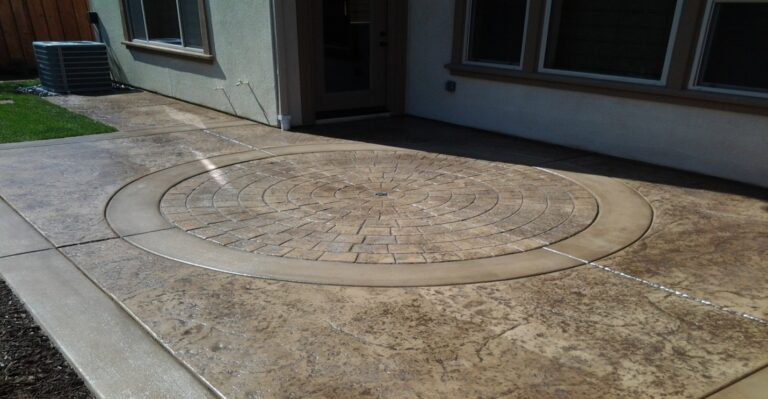
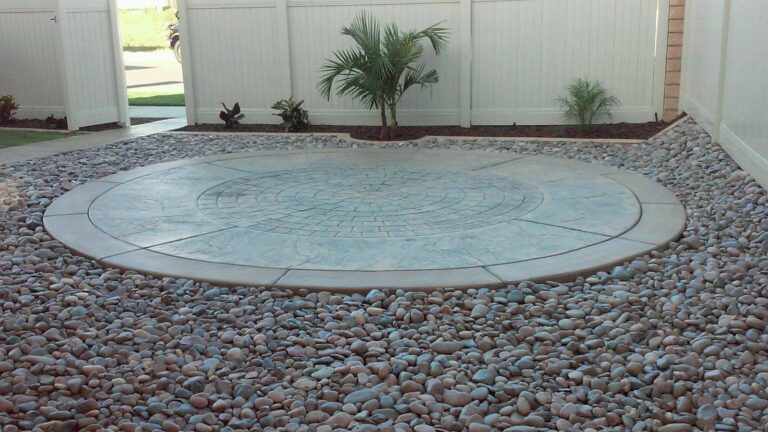
If you’re considering a patterned surface, ask how the crew maintains uniform texture and color across the pour and how they handle edges, steps, and transitions. Also confirm how many colors are planned (integral color, release agents, stains) and whether a sample area will be created to set expectations.
- If you want a patterned surface, review options for stamped concrete and ask how joint lines will be coordinated with the pattern.
- For richer tones, discuss colored concrete options and what variability is normal for the product and finish method.
- If you’re looking for texture, borders, or a custom look, explore decorative concrete and confirm the sealer and maintenance plan up front.
Slip resistance, pool-adjacent surfaces, and sealer choices
Traction is a design decision, and sealers can change how a surface feels when wet.
Glossy sealers can look great but may reduce traction depending on texture and conditions. If your patio is near a pool, outdoor shower, or frequently watered landscape, discuss texture level and whether additives or a different sealer approach is appropriate. Because products and site conditions vary, the contractor should describe the tradeoffs rather than offering one-size-fits-all recommendations.
Questions to Ask Your Concrete Patio Contractor San Diego Before You Sign
Good questions reveal how the contractor thinks about risk: cracking, drainage, curing, scheduling, and long-term maintenance.
Use the estimate meeting to evaluate communication and planning—not just numbers. A contractor who can explain their sequence, crew roles, and quality checks is easier to work with when conditions change (like unexpected soil issues or tight access).
- How will you set and verify slope so water drains away from the house?
- What base material will you use, how thick will it be, and how will you compact it?
- What reinforcement do you recommend for my site, and how will it be supported in the slab?
- Where will control joints and isolation joints go, and will you show them on a sketch?
- How will you cure the patio, and what protections will be used against rapid drying?
- What finish do you recommend for traction, and how will it look in full sun?
- If decorative work is included, how will color and pattern be approved before the full pour?
- Who is responsible for permits if they’re required for my scope?
- What is the plan for protecting landscaping, adjacent slabs, and walls from splatter or damage?
- What maintenance do you recommend (cleaning, resealing), and what can void product performance?
Planning Demolition, Replacement, and Site Prep Without Surprises
Replacing an old patio can expose hidden issues—like poor base material, drainage problems, or conflicting elevations—so your scope should anticipate unknowns.
If you’re removing existing concrete, ask how deep demolition will go and whether base will be rebuilt to meet current needs. Also confirm how the crew will protect nearby structures, fences, and utilities during removal and hauling.
- Confirm whether demolition includes breaking, loading, hauling, and disposal.
- Ask how they will handle discovered voids, soft soils, or buried debris.
- Verify whether irrigation lines, drains, and cleanouts will be reworked or boxed out.
- Discuss access constraints that can increase labor time and affect finishing windows.
If the project includes removal, it’s helpful to ensure concrete demolition is specifically listed so you’re not left coordinating disposal separately.
Timeline, Weather, and Curing: How to Protect the Final Finish
Scheduling and curing determine a patio’s early strength and surface durability, and they’re especially important during warm, dry, or windy conditions common in San Diego.
Even a well-placed slab can end up with surface issues if it dries too quickly or is used too soon. Confirm the contractor’s plan for access control (pets, foot traffic) and when it’s safe to place furniture, grills, or planters. If sealing is included, ask when it will happen and what the surface must look like (dryness, cleanliness) before application.
- Pre-pour: layout, forming, base compaction, reinforcement placement, and pre-pour walkthrough
- Pour day: placement, screeding, floating/troweling, edging, jointing, and finish texture
- Early cure: curing method applied, protection installed, and clear do-not-use windows
- Final steps: saw-cut joints (if used), sealer application (if specified), cleanup, and maintenance guidance
If you want a deeper look at sequencing and professional methods, review ways to pour a concrete patio professionally and use it as a checklist when discussing process with your contractor.
How to Set Expectations for Long-Term Care and Repairs
A patio lasts longer when you understand routine cleaning, sealing intervals (if applicable), and early warning signs of drainage or settlement issues.
Maintenance needs depend on finish type, exposure, and whether the patio is sealed. For example, decorative finishes may benefit from periodic resealing, while unsealed broom finishes often prioritize stain prevention and gentle cleaning habits. Your contractor should tell you what products to avoid and how soon you can wash the surface after installation.
- Cleaning: Use methods appropriate to the finish; aggressive chemicals or pressure washing can damage some sealers.
- Furniture and planters: Use protective pads; avoid trapping moisture under rugs or mats for extended periods.
- Drainage monitoring: After the first heavy rain, look for persistent puddles and report them early.
- Crack response: Hairline cracks can be cosmetic, but widening cracks or vertical displacement should be evaluated.
Understanding the material itself can help you ask better questions about performance and limitations; concrete is a composite material, and its long-term behavior depends heavily on mix design, placement, curing, and site conditions.
Make the Hiring Decision with a Simple, Documented Checklist
If you choose based on documented scope and clear communication, you’re more likely to get a patio that drains correctly, looks consistent, and holds up over time.
Before you commit, collect each bidder’s scope in writing and confirm that you’re comparing the same slab thickness, base, reinforcement, joints, finish, curing, and cleanup responsibilities. If something is important to you—like minimizing pattern cuts in a decorative surface or ensuring a specific drainage direction—spell it out and have it included. A well-defined agreement won’t eliminate uncertainty, but it dramatically reduces preventable misunderstandings during construction.
- Verify license and insurance documentation and that the proposal matches what was discussed onsite.
- Confirm a joint layout plan and a curing plan—two items that strongly influence performance.
- Require clear inclusion/exclusion language for demolition, haul-away, and site restoration.
- Approve finish expectations (texture, edges, color consistency range) before the pour.
- Ask who will supervise the crew and how issues will be communicated during the job.
Frequently Asked Questions
Get a Patio Plan You Can Compare With Confidence
If you’re collecting estimates for a new or replacement concrete patio, the fastest way to avoid surprises is to confirm the technical scope before the pour—base preparation, reinforcement, joint layout, slope for drainage, finish, and curing. A clear plan makes it easier to compare bids and set expectations for how the slab should perform in San Diego conditions.
Working with a contractor who documents these details can help reduce common issues like water ponding, uneven edges, or random cracking, and it gives you a written reference if questions come up during installation.
Request a straightforward, written patio proposal from Concrete Inc. of San Diego.